
PCB Assembly vs PCB Fabrication: What’s the Difference?

When you’re getting a PCB manufactured, two terms often come up: PCB Fabrication and PCB Assembly.
They are not the same thing, but both are important steps in turning a PCB design into a working electronic product.
1. PCB Fabrication: Making the Bare PCB
PCB fabrication is the process of manufacturing the physical circuit board from your PCB design files.
It includes processes such as:
• Copper pattern creation
• Drilling and routing
• Plating
• Solder mask application
• Silkscreen printing
• Surface finishing
• Electrical testing
The final output is a bare PCB, without electronic components mounted on it.
Fabrication is where factors such as layer stack-up, trace width, spacing, drill size, board thickness, surface finish and panelization become important.
2. PCB Assembly: Making the Board Functional
PCB assembly comes after fabrication.
Here, electronic components are mounted and soldered onto the bare PCB according to the BOM and assembly requirements.
Depending on the product, assembly may involve:
• SMT component placement
• Through-hole component insertion
• Reflow soldering
• Wave or selective soldering
• Component inspection
• Testing and rework
The result is a populated PCB assembly that can be tested and integrated into the final product.
So, what is the difference?
Think of it this way:
PCB Fabrication = Making the board
PCB Assembly = Putting the components on the board
Both stages directly influence the quality, reliability and manufacturing cost of the final electronic product.
At Reeyaa Circuit, we support PCB manufacturing requirements with a focus on practical production needs, from bare PCB fabrication to assembly-related requirements, helping customers move from PCB design to a manufacturable product.
A good design is important.
A good manufacturing process makes it reliable.
Design → Fabrication → Assembly → Testing → Product
Understanding the difference between fabrication and assembly can help engineers, startups and product developers make better manufacturing decisions from the beginning.
#PCB #PCBManufacturing #PCBAssembly #PCBFabrication #ElectronicsManufacturing #SMT #ElectronicsDesign #PCBDesign #DFM #ReeyaaCircuit
Related Articles

Why a DFM Review is Your Best Insurance Against PCB
Learn why a pre-production Design for Manufacturing (DFM) review is essential for electronics projects. Discover how catching trace clearance and drill errors early prevents costly PCB re-spins and project delays.

Choosing the Right PCB Copper Weight: 1 oz vs 2 oz vs 3 oz
Learn the differences between 1 oz, 2 oz, and 3 oz PCB copper weights, including copper thickness, current-carrying capacity, trace width, and applications. Discover how to select the right copper weight for digital circuits, power supplies, motor controllers, and EV electronics.
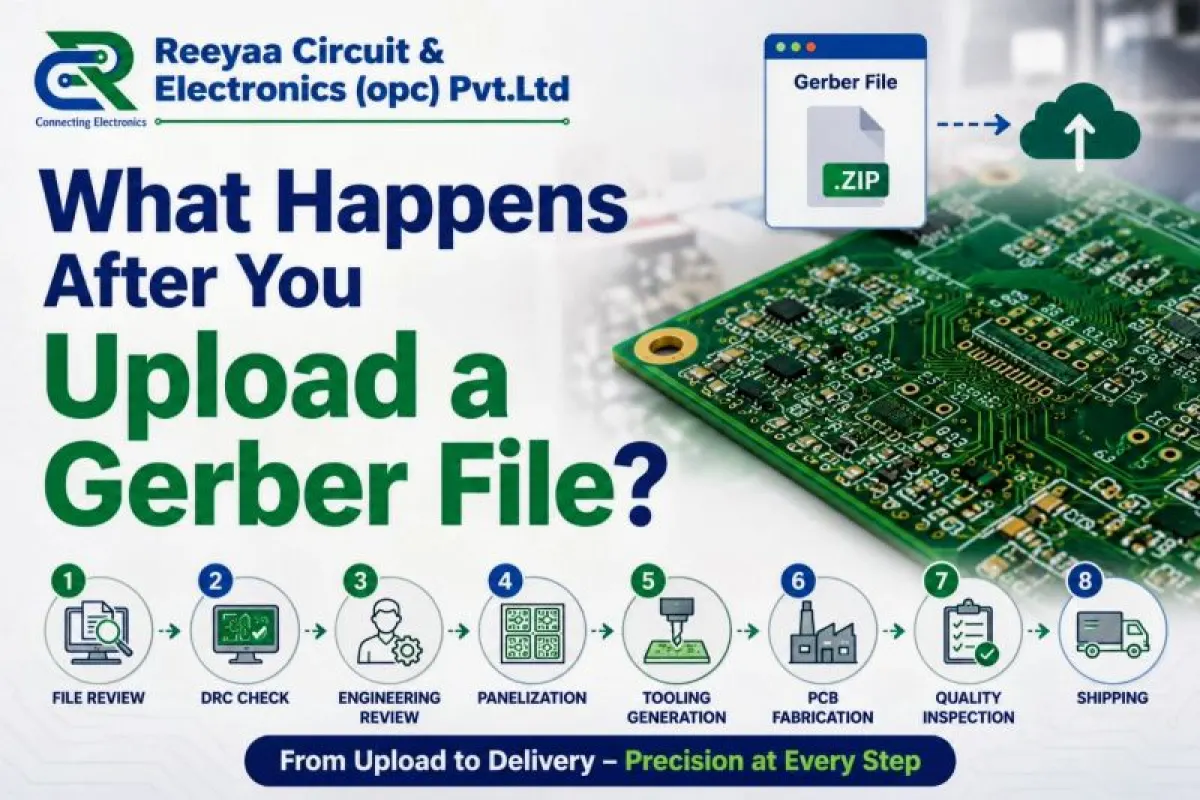
PCB Manufacturing Process: From Gerber Files to Final Delivery
Discover how a PCB moves from Gerber file submission to final delivery. Learn about design rule checks, CAM engineering review, panelization, fabrication, electrical testing, and common causes of production delays.